Pure to Drain Ratio in Reverse Osmosis Systems: What It Is and Is It Worth It?
As an Amazon Associate we earn from qualifying purchases. Links on this page are affiliate links.
Understanding Pure to Drain Ratio
The pure to drain ratio explained describes how much clean water a reverse osmosis system produces for every gallon of wastewater sent to your sewer. This metric is critical for evaluating water efficiency and operating costs over time. Most standard residential units operate with a ratio of 2:1. This means that for every two gallons of purified water you collect, one gallon is discarded as waste. Some newer or more efficient models achieve a 3:1 ratio. In these systems, three gallons of pure water are produced for every single gallon of wastewater. The difference may seem small, but it adds up significantly over months of daily use.
You will find this specification labeled directly on product listings or in technical datasheets. Look for terms like "recovery rate" or "pure to drain ratio." A 2:1 ratio corresponds to a 66% recovery rate, while a 3:1 ratio aligns with approximately 75% recovery. Higher recovery rates indicate better efficiency. However, efficiency often comes with trade-offs. Systems with better ratios may have larger storage tanks or require more frequent filter changes to maintain performance. They might also use energy-intensive pumps to push water through the membrane more effectively.
Buyers care about this spec because wastewater represents a direct loss of resources. In areas with high water costs or strict conservation rules, a 3:1 system offers tangible savings. It reduces your household water footprint. It also means less strain on your plumbing and septic systems. When comparing options, check the published specifications carefully. Do not assume all systems are equal. A higher ratio is generally preferable if it fits your budget and space constraints. Always verify the numbers in the data sheet before making a decision.
Comparing Pure To Drain Ratios
2:1 Pure to Drain
A 2:1 ratio means the system produces two gallons of pure water for every one gallon of wastewater. This is the most common efficiency standard for modern under-sink reverse osmosis units. You get a good balance between water conservation and high output. Models like the Waterdrop WD-T4-A 450 GPD and the iSpring RO500-BN use this ratio. These systems fit well in standard kitchen cabinets. They are suitable for most households that need steady water flow without excessive waste. The trade-off is minimal. You save more water than older systems while maintaining reliable filtration performance for daily cooking and drinking needs.
3:1 Pure to Drain
A 3:1 ratio indicates higher water efficiency, producing three gallons of pure water for every one gallon of wastewater. This design is rarer and often found in specialized countertop units. The DREO Countertop RO System and the DREO Countertop RO System (WF511) utilize this efficient ratio. This option suits renters or users who prioritize water conservation above all else. It reduces the volume of water sent to your drain. However, these units may have lower total daily production capacity compared to high-flow under-sink models. The benefit is less wastewater. The trade-off is potentially slower water delivery rates. You get cleaner water with less environmental impact, but you must check the gallon-per-day output to ensure it meets your household demand.
Is 2:1 or 3:1 Ratio Worth It
Who needs it
You should prioritize a 3:1 pure to drain ratio if your household consumes large volumes of drinking water daily. This specification directly impacts your water bill and environmental footprint. For families with high usage, the difference between 2:1 and 3:1 efficiency is substantial over time. A higher ratio means less wastewater is sent to the sewer for every gallon you drink. If you are concerned about water conservation or live in an area with strict usage limits, this spec matters. It also helps reduce the strain on your home’s plumbing and septic systems. Choosing a more efficient system ensures you are not wasting resources unnecessarily. The extra cost of advanced membranes is often offset by long-term savings on water usage. For eco-conscious buyers, this is a key decision factor.
Who can skip it
You can likely ignore the pure to drain ratio if you drink very little filtered water. If your household rarely uses the reverse osmosis tap, the wastewater difference is negligible. In this case, focus on other specs like filter lifespan, tank capacity, or installation complexity. These factors affect convenience and maintenance more than water efficiency. If you are on a tight budget, prioritize initial price over long-term water savings. The operational cost difference is minimal for low-volume users. You might also skip this consideration if you have access to excellent municipal water quality and only use RO for specific needs. In such scenarios, ease of use and filter availability are more practical concerns. Do not let efficiency metrics drive your purchase if your usage is infrequent.
RO Glossary Key Terms
Pure to Drain Ratio
The volume of clean water produced for each gallon of wastewater sent to the sewer. A 3:1 ratio yields three gallons of pure water for every one gallon of waste.
Wastewater
Contaminated water flushed away during the filtration process. This water carries rejected minerals and impurities out of the system to maintain membrane pressure and purity.
Membrane
The semi-permeable filter that removes up to 99% of contaminants. It forces water through microscopic pores, leaving impurities behind in the wastewater stream.
Rejection Rate
The percentage of contaminants blocked by the membrane. Higher rejection rates mean cleaner water but may require more pressure, affecting the pure to drain ratio.
Feed Water Pressure
The incoming water force required to push water through the membrane. Higher pressure improves efficiency and the pure to drain ratio without extra waste.
Storage Tank
A pressurized vessel holding purified water for immediate use. It allows the system to produce water slowly and efficiently, reducing continuous wastewater generation.
Efficiency Rating
A standardized measure of water usage per gallon of product. Newer standards reward systems with lower waste, such as a 3:1 or better pure to drain ratio.
Under-Sink Unit
A compact filtration system installed beneath your kitchen faucet. These units typically use a membrane and tank, balancing space constraints with water production speed.
Quick picks
| # | Product | Best for | Price |
|---|---|---|---|
| 1 | Waterdrop WD-T4-A 450 GPD Alkaline RO | Efficient alkaline water with tankless design | Check price of Waterdrop WD-T4-A 450 GPD Alkaline RO on Amazon |
| 2 | DREO Countertop RO System 5L | countertop users needing 3:1 efficiency | Check price of DREO Countertop RO System 5L on Amazon |
| 3 | iSpring RO500-BN Tankless RO System | High-flow under-sink purification needs | Check price of iSpring RO500-BN Tankless RO System on Amazon |
| 4 | DREO Countertop RO System | renters seeking efficient portable purification | Check price of DREO Countertop RO System on Amazon |
| 5 | Frizzlife 600 GPD Tankless RO | Space-saving alkaline RO with certified filtration | Check price of Frizzlife 600 GPD Tankless RO on Amazon |
| 6 | iSpring RO5004F UV Tankless RO | Kitchens needing UV protection and tankless design | Check price of iSpring RO5004F UV Tankless RO on Amazon |
Our 6 picks
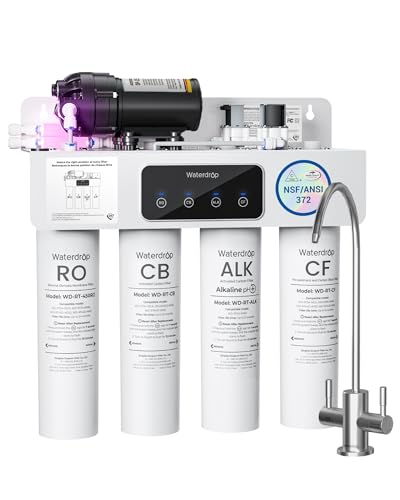
Waterdrop WD-T4-A 450 GPD Alkaline RO
Best for: Efficient alkaline water with tankless design
- Pure to Drain Ratio
- 2:1 Pure to Drain (what this guide is about)
- Filtration Stages
- 10
- Capacity (GPD)
- 450 GPD
- Design
- Under sink
- Certification
- NSF/ANSI 372
- Filtration Type
- Reverse osmosis, alkaline
View on Amazon: Waterdrop WD-T4-A 450 GPD Alkaline RO Affiliate link
The Waterdrop WD-T4-A is a tankless under-sink reverse osmosis system with a 450 GPD capacity and a 2:1 pure to drain ratio. It features 10-stage filtration including an alkaline mineralizer and NSF/ANSI 372 certification. This dual-flow design lets you switch between standard purified water and mineral-enhanced alkaline water. It suits buyers who want fast flow and water efficiency without a storage tank.
Pros
- 2:1 pure to drain ratio reduces wastewater
- 450 GPD flow rate for fast on-demand water
- 10-stage filtration with alkaline mineralizer
- NSF/ANSI 372 certified for lead-free materials
- Tankless design saves under-sink space
Cons
- Requires countertop drilling for faucet installation
- Needs electrical connection for operation
- Heavier build at 24.2 pounds
Good fit if
- You want a 2:1 water-saving ratio
- You prefer alkaline mineralized water
- You need a tankless under-sink system
Skip if
- You cannot drill holes in your countertop
- You do not have an electrical outlet under the sink
- You need a higher flow rate than 450 GPD
Verdict: Waterdrop WD-T4-A 450 GPD Alkaline RO is a solid choice for users who prioritize water efficiency and alkaline benefits in a compact tankless design.

DREO Countertop RO System 5L
Best for: countertop users needing 3:1 efficiency
- Pure to Drain Ratio
- 3:1 Pure to Drain (what this guide is about)
- Filtration Stages
- 7
- Design
- Countertop
- Certification
- NSF/ANSI 58
- Filtration Type
- Reverse osmosis
- Contaminants Removed
- PFOA, PFOS, chlorine, fluoride
View on Amazon: DREO Countertop RO System 5L Affiliate link
The DREO countertop RO system offers a 3:1 pure to drain ratio, meaning it produces three gallons of purified water for every one gallon sent to the drain. This 7-stage filtration removes PFOA, PFOS, chlorine, and fluoride, meeting NSF/ANSI 58 standards. It features a 5-liter capacity and self-cleaning function. You get peace of mind with SGS-tested performance in a compact 10.8-pound unit designed for counter installation.
Pros
- 3:1 pure to drain ratio improves water efficiency
- 7-stage filtration removes PFOA, PFOS, chlorine, and fluoride
- NSF/ANSI 58 certified and SGS tested
- Self-cleaning function maintains filter health
- 5-liter capacity for convenient storage
Cons
- Countertop design requires dedicated counter space
- Heavier build at 10.8 pounds
- No mention of smart app connectivity
Good fit if
- You want a high-efficiency 3:1 pure to drain ratio
- You need NSF/ANSI 58 certified filtration for PFOA and PFOS removal
- You prefer a countertop unit with a 5-liter capacity
Skip if
- You need a tankless under-sink installation
- You require a smaller 3-liter capacity
- You prefer a gray color option
Verdict: DREO Countertop RO 3:1 Ratio delivers efficient water use with certified contaminant removal. It suits you if you value a 3:1 pure to drain ratio and need a countertop unit that removes PFOA and PFOS.

iSpring RO500-BN Tankless RO System
Best for: High-flow under-sink purification needs
- Pure to Drain Ratio
- 2:1 Pure to Drain (what this guide is about)
- Capacity (GPD)
- 500 GPD
- Design
- Tankless
- Certification
- NSF 58
- Filtration Type
- Reverse osmosis
- Features
- Automatic self cleaning mode
View on Amazon: iSpring RO500-BN Tankless RO System Affiliate link
This tankless reverse osmosis system delivers 500 gallons per day with a 2:1 pure-to-drain ratio. It holds NSF 58 certification for TDS reduction and removes up to 99% of contaminants. The unit measures 8 by 19 by 24 inches and weighs 21 pounds. You get a fast flow rate of 0.4 gallons per minute. It includes an automatic self-cleaning mode to protect the membrane.
Pros
- NSF 58 certified for TDS reduction
- 2:1 pure-to-drain water ratio
- 500 GPD fast flow capacity
- Tankless design saves under-sink space
- Automatic self-cleaning membrane mode
Cons
- Larger physical footprint than compact units
- No alkaline mineral stage in base model
- Requires 8 by 19 by 24 inches of clearance
Good fit if
- You need a high-flow system under the sink
- You want NSF 58 certification for purity
- You prefer tankless designs to save space
Skip if
- You require an alkaline remineralization stage
- You have very limited under-sink clearance
- You need a countertop installation option
Verdict: iSpring RO500-BN Tankless RO offers strong purification with a 2:1 efficiency ratio for families needing fast water flow. It fits well in standard under-sink cabinets where space allows for its 21-pound frame.

DREO Countertop RO System
Best for: renters seeking efficient portable purification
- Pure to Drain Ratio
- 3:1 Pure to Drain (what this guide is about)
- Filtration Stages
- 7
- Design
- Countertop
- Certification
- SGS
- Filtration Type
- Reverse osmosis
- Installation Type
- Countertop
View on Amazon: DREO Countertop RO System Affiliate link
This DREO countertop unit uses a 7-stage filtration process with a 0.0001-micron RO membrane. It features a 3:1 pure-to-drain ratio, which reduces water waste compared to less efficient models. The system includes real-time TDS monitoring and auto-flushing. You get two BPA-free pitchers for on-the-go use. It requires no plumbing, making it suitable for renters or offices who need flexible placement without installation.
Pros
- 3:1 pure-to-drain ratio minimizes wastewater
- SGS certified to remove PFAS and lead
- No plumbing or tools required for setup
- Real-time TDS display tracks water purity
- Includes two pitchers for portable hydration
Cons
- Countertop footprint requires significant counter space
- Manual pitcher filling needed for each use
- No smart app integration for remote monitoring
Good fit if
- You rent and cannot modify plumbing
- You want to reduce water waste
- You need flexible placement in your kitchen
Skip if
- You need high daily production volume
- You prefer a permanent under-sink installation
- You want remote app control for filters
Verdict: DREO Countertop RO System fits users who prioritize water efficiency and portability over high output. It is ideal for those who need a plug-and-play solution without plumbing changes.

Frizzlife 600 GPD Tankless RO
Best for: Space-saving alkaline RO with certified filtration
- Pure to Drain Ratio
- 2:1 Pure to Drain (what this guide is about)
- Capacity (GPD)
- 600 GPD
- Design
- Tankless, under sink
- Certification
- NSF/ANSI 58, 53, 42, 372
- Filtration Type
- Reverse osmosis, alkaline
- Contaminants Removed
- FPAS, PFOA
View on Amazon: Frizzlife 600 GPD Tankless RO Affiliate link
This Frizzlife unit is a tankless under-sink reverse osmosis system with a 600 GPD capacity. It features a 2:1 pure to drain ratio, which reduces water waste compared to older models. The third stage adds an alkaline mineral filter to raise pH above 7.5. It includes a smart LED display for TDS monitoring and filter life. The system is NSF/ANSI 58, 53, 42, and 372 certified.
Pros
- 2:1 pure to drain ratio for water efficiency
- 600 GPD tankless design saves under-sink space
- Alkaline mineral filter raises pH above 7.5
- NSF/ANSI 58, 53, 42, and 372 certified
Cons
- 2:1 ratio wastes more water than 3:1 models
- Only three filtration stages listed
- No UV sterilization stage included
Good fit if
- You want a tankless system to save space
- You prefer alkaline, mineralized drinking water
- You need NSF certification for contaminant removal
Skip if
- You require a 3:1 or better water ratio
- You need a multi-stage UV purification system
- You want a countertop unit instead of under-sink
Verdict: Frizzlife PD600 600 GPD Alkaline RO suits those who value tankless efficiency and alkaline water. It fits homes prioritizing space savings and certified mineral filtration over maximum water conservation.

iSpring RO5004F UV Tankless RO
Best for: Kitchens needing UV protection and tankless design
- Pure to Drain Ratio
- 2:1 Pure to Drain (what this guide is about)
- Filtration Stages
- 6
- Capacity (GPD)
- 500
- Design
- Tankless
- Filtration Type
- Reverse osmosis, UV
- Installation Type
- Under sink
View on Amazon: iSpring RO5004F UV Tankless RO Affiliate link
This iSpring system uses a 500 GPD tankless design with a 2:1 pure to drain ratio. It includes a built-in pump for low water pressure and a UV light for added protection. The 6-layer filtration removes PFAS and TDS. You get high flow rates without a storage tank. The compact size fits under most sinks. It suits those wanting advanced filtration with efficient water use.
Pros
- 2:1 pure to drain ratio
- 500 GPD high flow rate
- Built-in pump for low pressure
- UV filtration layer
Cons
- 2:1 ratio uses more water than 3:1 models
- Requires electrical outlet for pump and UV
- Heavier build at 15 pounds
Good fit if
- You need a tankless system with UV protection
- You have low water pressure
- You want a 2:1 efficiency ratio
Skip if
- You require a 3:1 pure to drain ratio
- You cannot install an electrical outlet under the sink
- You prefer a system without a built-in pump
Verdict: iSpring RO5004F Tankless RO with UV offers strong filtration and flow for kitchens needing UV protection. It fits users who prioritize tankless design and can accommodate a power source for the pump.
Specifications side by side
| Spec | Waterdrop WD-T4-A 450 GPD Alkaline RO | DREO Countertop RO System 5L | iSpring RO500-BN Tankless RO System | DREO Countertop RO System | Frizzlife 600 GPD Tankless RO | iSpring RO5004F UV Tankless RO |
|---|---|---|---|---|---|---|
| Filtration Stages | 10 | 7 | not stated | 7 | not stated | 6 |
| Capacity (GPD) | 450 GPD | not stated | 500 GPD | not stated | 600 GPD | 500 |
| Design | Under sink | Countertop | Tankless | Countertop | Tankless, under sink | Tankless |
| Pure to Drain Ratio | 2:1 | 3:1 | 2:1 | 3:1 | 2:1 | 2:1 |
| Certification | NSF/ANSI 372 | NSF/ANSI 58 | NSF 58 | SGS | NSF/ANSI 58, 53, 42, 372 | not stated |
| Filtration Type | Reverse osmosis, alkaline | Reverse osmosis | Reverse osmosis | Reverse osmosis | Reverse osmosis, alkaline | Reverse osmosis, UV |
| Contaminants Removed | not stated | PFOA, PFOS, chlorine, fluoride | not stated | not stated | FPAS, PFOA | not stated |
| Installation Type | Under sink | Countertop | not stated | Countertop | Under sink | Under sink |
| Features | not stated | not stated | Automatic self cleaning mode | not stated | Smart LED display, TDS monitor | not stated |
| Micron Rating | not stated | not stated | not stated | 0.0001 | not stated | 0.0001 |
| Capacity | not stated | not stated | not stated | not stated | 600 GPD | not stated |
| Use | not stated | not stated | not stated | Home, Kitchen | not stated | not stated |
| Color | White - Alkaline Water | White | White + Brushed Nickel Faucet | Gray | PD600-TAM3 Alkaline Reverse Osmosis System | White - RO |
| Self Cleaning | not stated | Self Cleaning | not stated | not stated | not stated | not stated |
| Dimensions | 16.5 × 6.22 × 18 inches | 15.7 × 6.73 × 13.4 inches | 19 × 8 × 24 inches | 15.9 × 9.06 × 13.1 inches | 15 × 6.1 × 17.7 inches | 15.2 × 6.1 × 16.6 inches |
| Weight | 24.2 pounds | 10.8 pounds | 21 pounds | 14.6 pounds | not stated | 15 pounds |
| Size | 450 GPD | 5L | NSF 500 GPD RO | Standard | not stated | Standard |
| Model | WD-RT44D-WAD | DR-KWF003 White | RO500 | WF511 | 600 GPD Mineralized RO | RO5004F |
Frequently asked questions
How much water does a 2:1 RO system waste?
A system with a 2:1 pure to drain ratio wastes one gallon of water for every two gallons of purified output. This means 33% of the input water becomes wastewater. Models like the Waterdrop WD-T4-A and iSpring RO500-BN use this common standard. You should expect a steady stream of waste water during operation. This ratio balances efficiency with cost for most households.
What is the benefit of a 3:1 pure to drain ratio?
A 3:1 ratio produces three gallons of pure water for every one gallon of wastewater. This improves efficiency by reducing water waste by 25% compared to 2:1 systems. The DREO Countertop RO System 5L and the standard DREO Countertop RO System both offer this higher efficiency. You save more water if you drink large volumes daily. It is ideal for eco-conscious users.
Do tankless RO systems have better pure to drain ratios?
Tankless designs do not inherently change the ratio, but they often pair with efficient membranes. The Waterdrop WD-T4-A and iSpring RO500-BN are tankless and use a 2:1 ratio. Tankless units produce water on demand, which can reduce standby waste. You get fresh water without a storage tank. This design suits those who want consistent flow rates.
Is a 3:1 ratio worth the extra cost?
Higher efficiency reduces your water bill over time. A 3:1 ratio uses less water per gallon of output. The DREO models provide this efficiency for countertop use. You save water without sacrificing filtration quality. If you value resource conservation, this ratio is a strong choice. It is especially useful for large families or high-usage kitchens.
Can I adjust the pure to drain ratio on my RO system?
Most residential systems do not allow manual adjustment of the ratio. The ratio is determined by the membrane and internal valve settings. You cannot change a 2:1 system to 3:1 without replacing components. The specifications are fixed at purchase. Check the product data before buying if efficiency is your priority. Upgrades usually require a new unit.
Does a higher ratio affect water pressure?
The pure to drain ratio does not directly lower your faucet pressure. Tankless models like the Frizzlife 600 GPD maintain strong flow rates. The 2:1 ratio in these units ensures steady output. You get fast filling times for pitchers or pots. Efficiency and pressure are separate specifications. Look for high GPD ratings for better flow.
Are countertop RO systems less efficient than under-sink models?
Countertop units can match under-sink efficiency. The DREO Countertop RO System 5L offers a 3:1 ratio. This beats the 2:1 standard of many under-sink units. You get high efficiency in a portable form. The choice depends on your installation needs. Countertop models are great for renters who cannot modify plumbing.